Realistic training should assess recognition, restraint, and communication—not just accuracy. Explore the value and limitations of scenario-based simulation.
Tactical Edge / Feature Story

Tactical Edge / Feature Story
Realistic training should assess recognition, restraint, and communication—not just accuracy. Explore the value and limitations of scenario-based simulation.
A paper target can record where a shot landed. It cannot, by itself, explain whether that shot was justified, necessary, or the wisest available decision. Those questions belong at the center of meaningful scenario-based education, not at the edge of a qualification score.
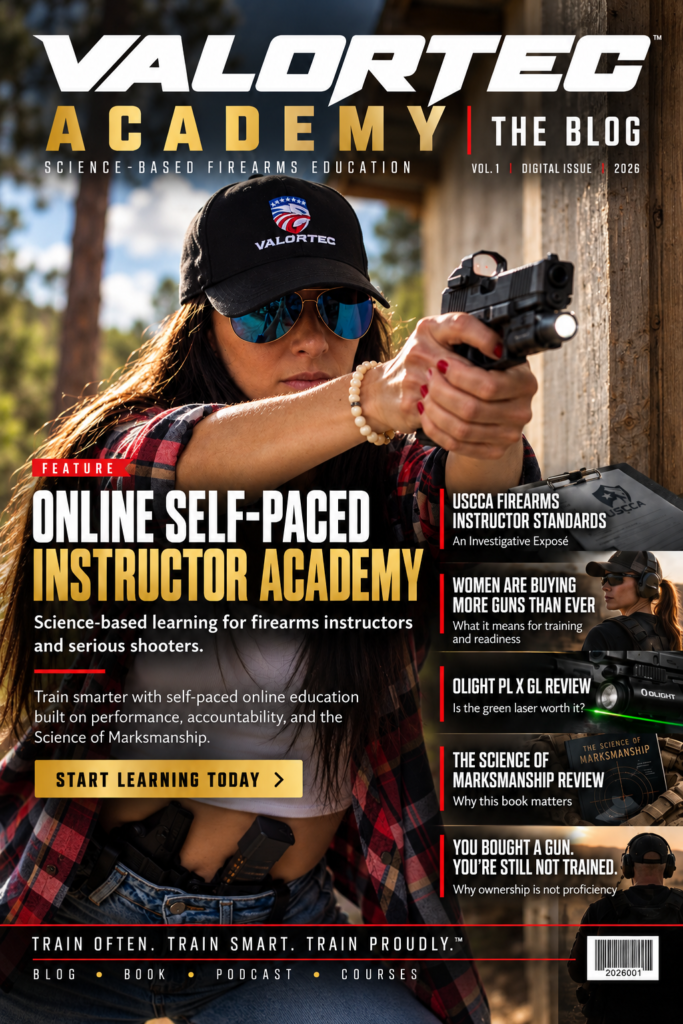
Technical proficiency matters when handling firearms, but accuracy alone does not establish good decision-making. A participant may face incomplete information, conflicting instructions, or circumstances in which the responsible response is to communicate, disengage, or choose not to use force.
Scenario-based instruction can make these distinctions visible in a controlled educational setting. The objective should not be to reward dramatic reactions. It should be to encourage an informed explanation of decisions, awareness of legal constraints, and attention to the safety of others.
Valortec’s public materials describe a mobile Laser Shot training system that combines virtual marksmanship exercises with judgment-focused scenarios. Because the system does not use live ammunition during simulator sessions, it can create room for instructor-led discussion, observation, and review in suitable indoor facilities.
Technology is only a tool. The quality of the instruction depends on who selects the learning objectives, how scenarios are explained, and whether an instructor can identify the difference between a sound decision and an attractive score. Any simulation has limits, including the degree to which a digital scenario represents unpredictable human behavior.
A useful debrief asks participants what information they recognized, what remained uncertain, which alternatives they considered, and how the decision relates to applicable policies or law. Such discussion can reveal assumptions that a simple accuracy score never captures.
This is also where instructors must be careful. Training should not imply that one simplified scenario offers a universal answer to a complicated encounter. Ethical discussion, proportionality, de-escalation, communication, and the limits of judgment must remain visible.
A digital training experience can support classroom education, foundational review, and discussion of choices. It is not a substitute for state-required live-fire qualification, supervised practical firearms education, or professional licensing requirements unless the relevant authority expressly recognizes a particular alternative.
For agencies, private groups, or responsibly armed civilians, the best question is not whether the technology looks realistic. It is whether it produces meaningful feedback and helps participants become safer, more thoughtful decision-makers.
Action should never be the starting assumption. Better education begins by asking what is happening, what choices exist, and what responsibilities follow.
Explore more Tactical Edge cover stories · Return to the magazine