An editorial look at Valortec Knowledge Academy’s self-paced education, the science of marksmanship, and why online learning should complement practical instruction.
Tactical Edge / Feature Story

Tactical Edge / Feature Story
An editorial look at Valortec Knowledge Academy’s self-paced education, the science of marksmanship, and why online learning should complement practical instruction.
Many firearms classes begin with an explanation, move quickly into supervised practice, and end before students have fully processed why a technique matters. Digital education cannot replace hands-on instruction, but it can give learners something valuable: time to study, revisit, question, and assess the concepts between practical sessions.
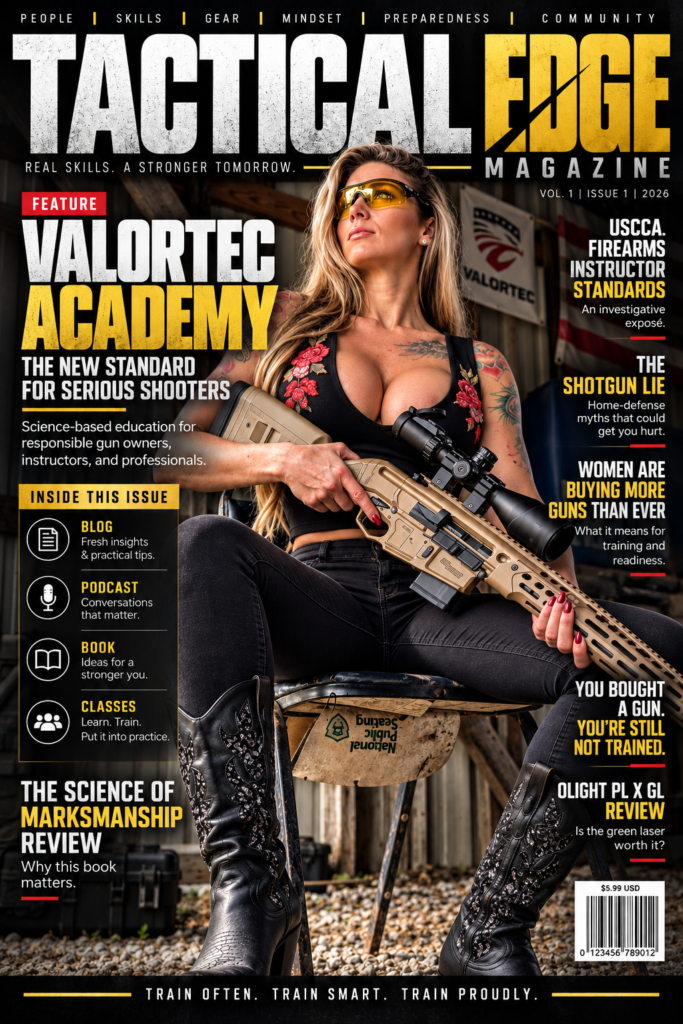
Valortec Knowledge Academy is a self-paced educational platform built around the company’s marksmanship research and instructional knowledge base. The public curriculum describes 200 micro-lessons grouped into 16 learning tracks, with five review questions for each lesson. Access to protected lessons depends on eligible enrollment.
The curriculum covers areas such as biomechanical alignment, visual processing, trigger interaction, recoil principles, optics, stress, instructor accountability, and responsible practice. The value of this structure is the opportunity to return to a concept more than once instead of treating a single classroom presentation as the end of learning.
A complex subject becomes easier to study when an instructor separates the underlying concepts into manageable questions. Short lessons do not automatically produce mastery, but they create natural opportunities for review, feedback, and recognition of gaps in understanding.
Knowledge checks serve a different purpose from live-fire performance evaluation. They can reveal whether students understand terminology, legal context, or a principle. They cannot independently demonstrate safe gun handling, real-world judgment, or physical skill. Those outcomes require appropriate practical supervision and evaluation.
The Academy’s science-oriented program draws from The Science of Marksmanship and related Valortec educational materials. Its emphasis is on examining the reasons behind training advice rather than memorizing a rigid list of commands. That approach invites instructors and students to investigate why outcomes vary.
Subjects like biomechanics and motor learning are not merely academic decoration. They can help an instructor ask more precise questions about a student’s progress. At the same time, scientific language should never replace evidence, qualified instruction, or responsible judgment.
The Academy also lists a Florida Class G written-exam preparation resource. Its published description identifies 20 lessons and 100 practice questions. That is a study aid for the written component, not a state-issued license or substitute for mandatory training and requalification.
The same distinction applies to the broader online Academy: self-paced coursework expands knowledge, while supervised practical instruction serves a different and indispensable role. Readers evaluating online training should look for such limitations stated clearly, rather than being promised a credential the platform is not authorized to grant.
Digital learning is strongest when it adds context and reflection to practical experience. The Academy’s most useful message is not that education can move entirely online, but that thoughtful learning should continue long after a course ends.
Explore more Tactical Edge cover stories · Return to the magazine